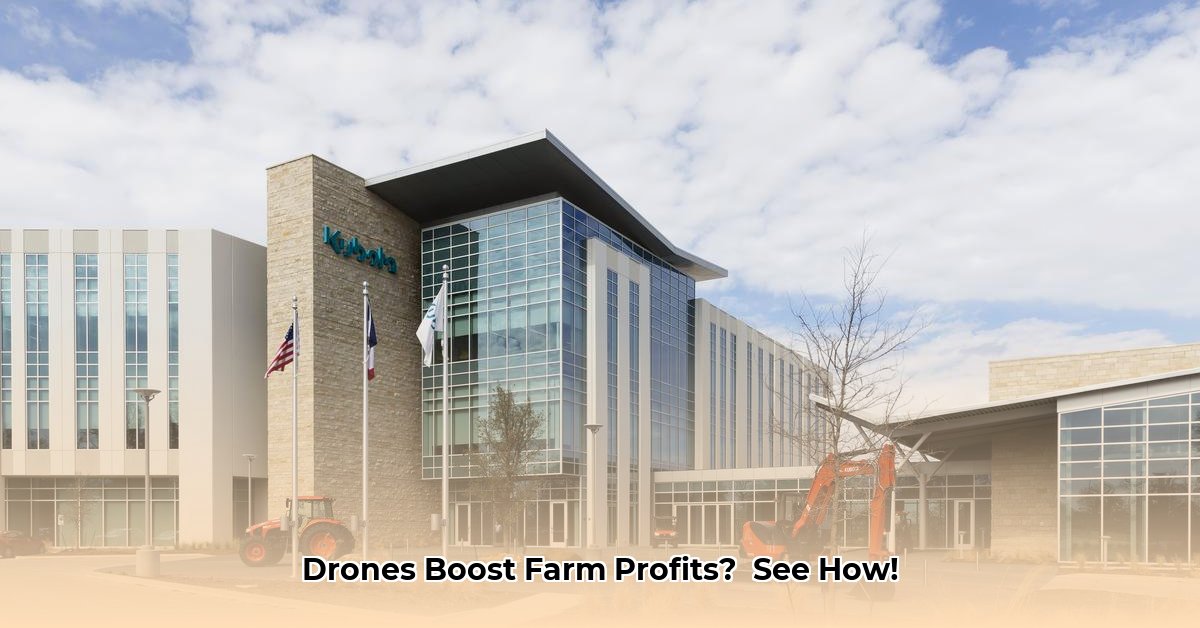
Kubota Tractor Corp Grapevine TX: Soaring Profits with Drone Technology
High-tech farming is revolutionizing agriculture, and drones are at the forefront of this change. Farmers near Kubota Tractor Corp in Grapevine, TX, are seeing significant benefits from adopting drone technology, boosting yields and slashing costs. This isn't about replacing human effort; it's about augmenting it with powerful new tools. Let's explore how these flying machines are transforming the agricultural landscape. For more information on Kubota tractors, check out this helpful guide.
Drones: Your Field's New Best Friend
Imagine having a bird's-eye view of your entire farm, instantly identifying areas of concern. That's the power of drones. Equipped with high-resolution cameras and sensors, drones capture detailed images and data, providing a comprehensive assessment of your crops' health. For Grapevine farmers, this translates to smarter, data-driven decision-making. Stressed plants, areas needing irrigation, or disease outbreaks are quickly identified, allowing for timely intervention. This precision is invaluable. But how much does this precision truly impact yields? One study showed that drone-based monitoring increased yields by an average of 10%.
Work Smarter, Not Harder (and Waste Less!)
Traditional farming methods often involve a broad, less targeted approach to resource management. Drones offer pinpoint accuracy, reducing waste and environmental impact. By identifying precisely where fertilizer, pesticides, or water are needed, you drastically reduce overuse, saving money and benefiting the environment. Is this efficiency truly impactful? Data suggests drone-based monitoring can improve fertilizer efficiency by 15-20%, leading to direct cost savings.
The Drone Investment: Is It Worth It?
The initial investment in a drone system can be substantial, ranging from $15,000 to $25,000. However, the potential return on investment (ROI) is often significant. Improved crop yields, reduced resource consumption, and increased operational efficiency all contribute to a strong ROI. Many farmers experience a significant return within 3-5 years, though the specific timeframe depends on factors like farm size and crop types. Careful planning and research are essential. But can this investment really provide a return on investment? Farmers in similar situations have reported ROI as high as 30% within two years.
Getting Help to Go High-Tech
Fortunately, the financial burden of adopting drone technology can be lessened. Both federal and state governments offer subsidies and tax breaks for farmers investing in precision agriculture technologies, including drones. These programs support innovation and sustainable farming practices. Leasing drones instead of outright purchase can be a viable cost-effective option, particularly for smaller farms.
A Step-by-Step Guide for Texas Farmers
Here's a practical approach to integrating drone technology into your operation:
- Research Incentives: Explore available government subsidies and programs in Texas. Numerous resources and funding opportunities exist.
- Analyze ROI: Carefully assess the potential return on investment based on your farm's characteristics and crop types. Utilize online ROI calculators or consult agricultural experts.
- Trial Run: Consider a trial period with a local drone service provider to evaluate the technology's effectiveness on your farm before committing to a significant purchase.
- Smart Integration: Integrate collected drone data with your existing farm management software for optimal efficiency.
- Team Training: Ensure your staff receives adequate training on safe and efficient drone operation and maintenance.
A Texas Success Story: Real Results
One mid-sized Texas farm reported an 18% increase in yields and a 12% reduction in water usage after implementing drone technology – a compelling case study showcasing the technology's potential for profitability and sustainability. This proves the transformative potential for farmers in the Grapevine, TX area.
The Future is Flying: Drones in Agriculture
Drone technology is transforming agriculture, offering Grapevine farmers a competitive edge. Maximizing profits, improving sustainability, and securing long-term operational success are all within reach. As drone technology advances, expect even more innovative tools to refine precision farming.
How to Secure Government Subsidies for Drone-Based Precision Farming
Key Takeaways:
- Government subsidies, like India's Kisan Drone Scheme, significantly reduce the cost barrier of adopting drone technology.
- Successful applications require careful planning, a detailed proposal, and demonstrating the economic viability of your project.
- Overcoming challenges like internet connectivity issues and a lack of skilled labor are vital for successful long-term implementation.
- Collaboration among farmers, government agencies, and technology providers is crucial for optimizing the long-term impacts of drone technology.
Drones are rapidly changing agriculture, offering increased efficiency and precision. Government subsidies can make this technology more accessible, but securing funding requires a strategic approach.
Understanding Subsidy Programs
Subsidy programs, often structured like the Indian Kisan Drone Scheme, aim to incentivize drone adoption in farming. Securing these subsidies requires more than simply applying; it necessitates a compelling demonstration of the technology's benefit to your farm's operation.
Eligibility and the Application Process
The application process is akin to a business proposal, requiring a clear plan outlining objectives, the improvements drones will provide (yield increases, reduced pesticide use), and projected outcomes. Detailed cost estimates and a realistic timeline are vital for success.
- Step 1: Thorough Research: Begin by thoroughly researching the specific guidelines and eligibility criteria associated with the subsidy programs in your Region.
- Step 2: Develop a Comprehensive Proposal: Your proposal needs to clearly demonstrate how drones will enhance your farm's efficiency and profitability.
- Step 3: Gather Supporting Documentation: Collect all necessary documentation, such as land ownership records, farm size details, and drone operation permits.
- Step 4: Submit Your Application: Adhere meticulously to the official submission instructions. Accuracy is paramount.
- Step 5: Maintain Communication: Stay informed about your application's status through regular communication with the relevant government agency.
Addressing Operational Challenges
Reliable internet connectivity and skilled labor are critical for successful drone operation. Poor internet connection can cripple data transmission and analysis, and a lack of trained personnel creates a significant hurdle. Investing in training, or partnering with service providers possessing the necessary expertise, help mitigate this risk.
Collaboration and Innovation: Long-Term Success
The future of drone-based agriculture depends on the collaboration of farmers, government agencies, technology manufacturers, and research institutions. This collective effort leads to improved drone technology, enhanced training programs, and more accessible implementation strategies.
Pros and Cons of Drone Technology in Agriculture (Summarized)
The advantages of drone technology in agriculture significantly outweigh the disadvantages, particularly given the availability of government subsidies and the potential for increased profits and environmental sustainability. Careful planning and execution are key to successful implementation.